3rd EV Conference
An Uneven Road Ahead, but the Future Is Electric
Published
Multan — 18 October 2025
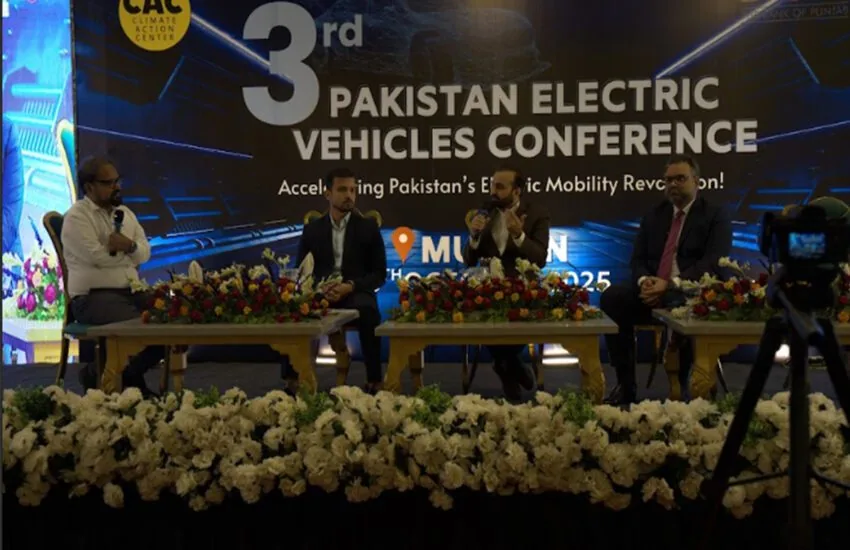
Climate Action Center organised the third edition of its Electric Vehicles Conference in Multan, following earlier editions in Karachi and Lahore.
Sponsored by the Bank of Punjab and supported by electric-bike manufacturer Horwin, the event brought together stakeholders from industry, banking, government and academia to discuss Pakistan’s transition towards cleaner mobility.
The conference emphasised that a sustainable EV transition requires collaboration: policymakers designing incentives, banks offering financing, manufacturers developing technology and civil society building public awareness.
The direction of electric mobility
CAC Director Yasir Husain said the event reflected growing recognition that electric mobility is no longer a distant ambition. He highlighted the connection between electric transport, air quality, the national EV policy and the need to establish battery-recycling capacity.
Naeem Javid, Head of Project Finance and Equity Advisory at the Bank of Punjab, presented global and local market trends, Pakistan’s New EV Policy 2025–2030, tax incentives and the importance of long-term, cost-efficient financing.
Industry, finance and standards
The first panel featured Horwin General Manager Nauman Alvi, Capital Smart Motors representative Furrukh Raza, Bank of Punjab’s Naeem Javid and Nexcells CEO Jamshed Iqbal. It examined opportunities and obstacles across two-wheelers, four-wheelers and public transport.
Panelists discussed financing restrictions, consumer trust, charging systems and the need for standardised protocols for batteries and chargers. They also highlighted Pakistan’s fuel-import dependence and the potential air-quality benefits of electrifying two- and three-wheelers.
Furrukh Raza discussed building consumer confidence through greater choice and international partnerships, while Jamshed Iqbal warned that short-lived, low-quality batteries can undermine consumer trust and called for stronger battery standards and quality assurance.
Access, inclusion and public transport
A second panel moderated by Maira Mumtaz from CAC focused on inclusion and accessibility, examining how electric vehicles could serve women and lower-income groups and connect with Pakistan’s wider electricity landscape.
Muhammad Saeed Akhter of Okla Pakistan discussed the effect of price on adoption and the growing use of electric scooters by women. Shahzaib Ahmed connected local manufacturing with employment and called for clear rules on imported components and approved battery suppliers.
Muhammad Yasin from the Punjab Mass Transit Authority described the operation of electric buses in Multan and the urgent need for supporting charging infrastructure.
Energy expert Dr Khalid Waleed of SDPI framed Pakistan’s EV future around economy, energy and environment. He emphasised renewable-powered charging, accessibility and the importance of beginning the transition with public transport.
CAC’s Hussain Rizvi and Javeria concluded that although the journey remains uneven, the direction is clear: the future of transport is electric, and collaboration can make that future sustainable and inclusive.