Pakistan’s First-Ever Citywide Climate Week Karachi 2026
Published
Karachi — February 2026
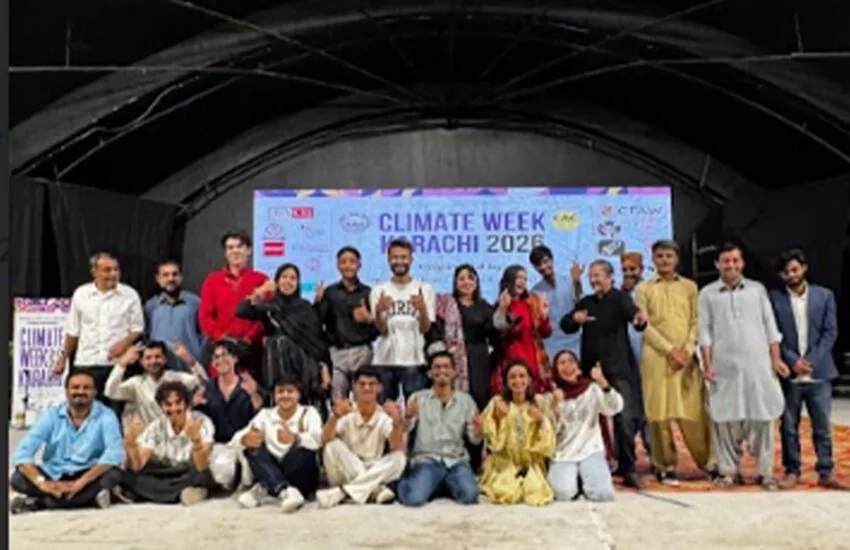
Climate Week Karachi 2026, Pakistan’s first city-wide climate week, concluded after a week of conversations, artistic interventions, public engagement and collective reflection on Karachi’s climate future.
Organised by Climate Action Center Karachi from 29 January to 4 February 2026, the programme activated the city’s cultural, academic, civic, coastal and public spaces through the unifying ecological and civilisational lens of the River Indus.
Under the theme ‘Tides of Tomorrow: City, Memory, Future’, the week brought together artists, poets, climate activists, riverine and coastal communities, scientists, historians, researchers, policymakers, students, civil-society organisations, government representatives and citizens.
The River Indus as a living archive
At the heart of Climate Week Karachi was the River Indus — not only Pakistan’s primary river system, but a living archive of the region’s history, labour, culture, ecological memory and collective future.
From the glaciers of the north to its fragile delta at the Arabian Sea, the Indus connected conversations about land, livelihoods, communities, histories and survival.
Karachi, located at the river’s deltaic edge, carries the cumulative consequences of climate change, upstream extraction, sea-level rise, salinity intrusion, ecological collapse, extreme heat, water insecurity, air pollution and energy crises. Through exhibitions, dialogues, screenings, workshops, performances and policy conversations, the programme framed the Indus as a shared inheritance and a barometer of environmental injustice.
Energy, culture and climate justice
The week foregrounded the connected ecologies of water, land, labour, memory, livelihood, health and climate justice. Its programming created space for scientific knowledge to meet cultural practice, for data to become stories and for everyday experiences to enter a wider environmental and civic narrative.
Sessions also focused on Karachi’s energy future, connecting dependence on fossil fuels with damage to air, water and land as well as deepening social and economic inequality. The programme called attention to a transition towards green, clean, affordable and renewable energy.
Climate Week Karachi emphasised that energy transition is not only a technological shift, but a social and cultural transformation connected to labour, public health, urban air, livelihoods and climate justice.
A continuing public movement
The week positioned Karachi not as a passive victim of climate change, but as a space of imagination, resistance and collective action. It built bridges between knowledge systems, amplified lived experiences and mobilised a broader public towards just and climate-resilient urban futures.
At its conclusion, CAC emphasised that Climate Week Karachi 2026 was not the end of a conversation but the beginning of a long-term public climate movement — one that must enter the places where people live, learn, work, create, struggle and imagine their futures.
The programme opened a new chapter by placing the city, the river and its people at the centre of climate discourse and calling for urgent, inclusive and justice-centred action rooted in both science and lived experience.