Electric Vehicles
A people-centred programme connecting electric mobility with cleaner air, public health, sustainable transport and climate action across Pakistan.
 CAC field image · 01
Cleaner transport is a public-health priority.
Pakistan’s transport future is changing rapidly. As cities expand, traffic congestion, fuel costs, vehicle emissions and poor air quality are becoming everyday concerns. In Karachi and other major urban centres, millions of daily trips still depend on petrol and diesel vehicles, contributing to air pollution, rising health risks and climate emissions.
Electric vehicles offer a practical pathway to reduce emissions, improve air quality, lower fuel dependency and support cleaner urban mobility.
 CAC field image · 01
Making the EV transition visible, practical and people-centred.
For CAC, EVs are not only a technology shift. They are part of a wider conversation about clean air, public health, sustainable mobility and climate action.
The programme focuses on awareness, stakeholder platforms, policy engagement, infrastructure conversations, financing opportunities and cleaner transport choices for the future.
- 01Public awareness and clean-air education.
- 02Policy engagement and stakeholder coordination.
- 03Charging infrastructure and renewable-energy integration.
- 04Financing pathways and sustainable public transport.
From Karachi to Lahore and Multan.
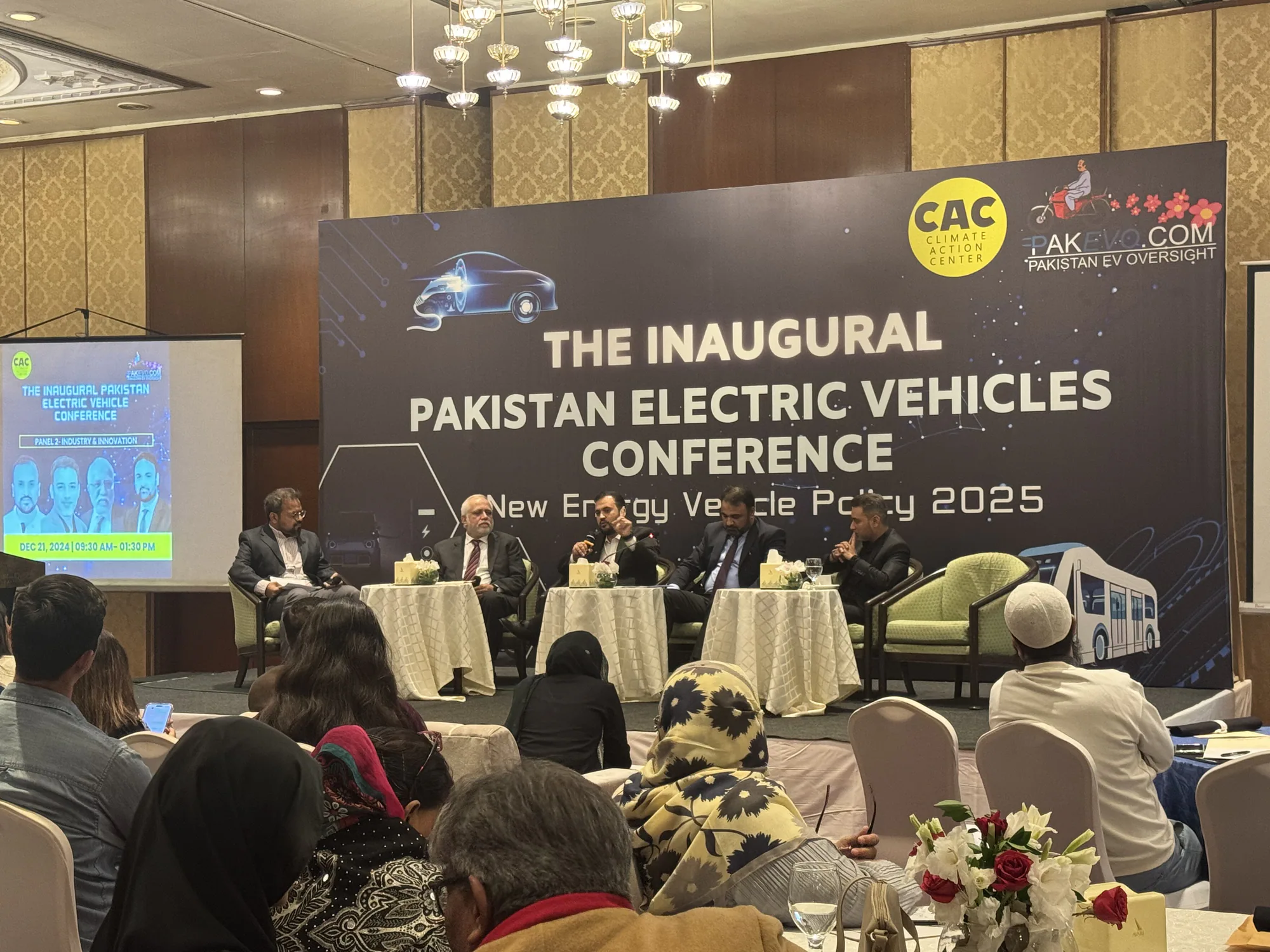
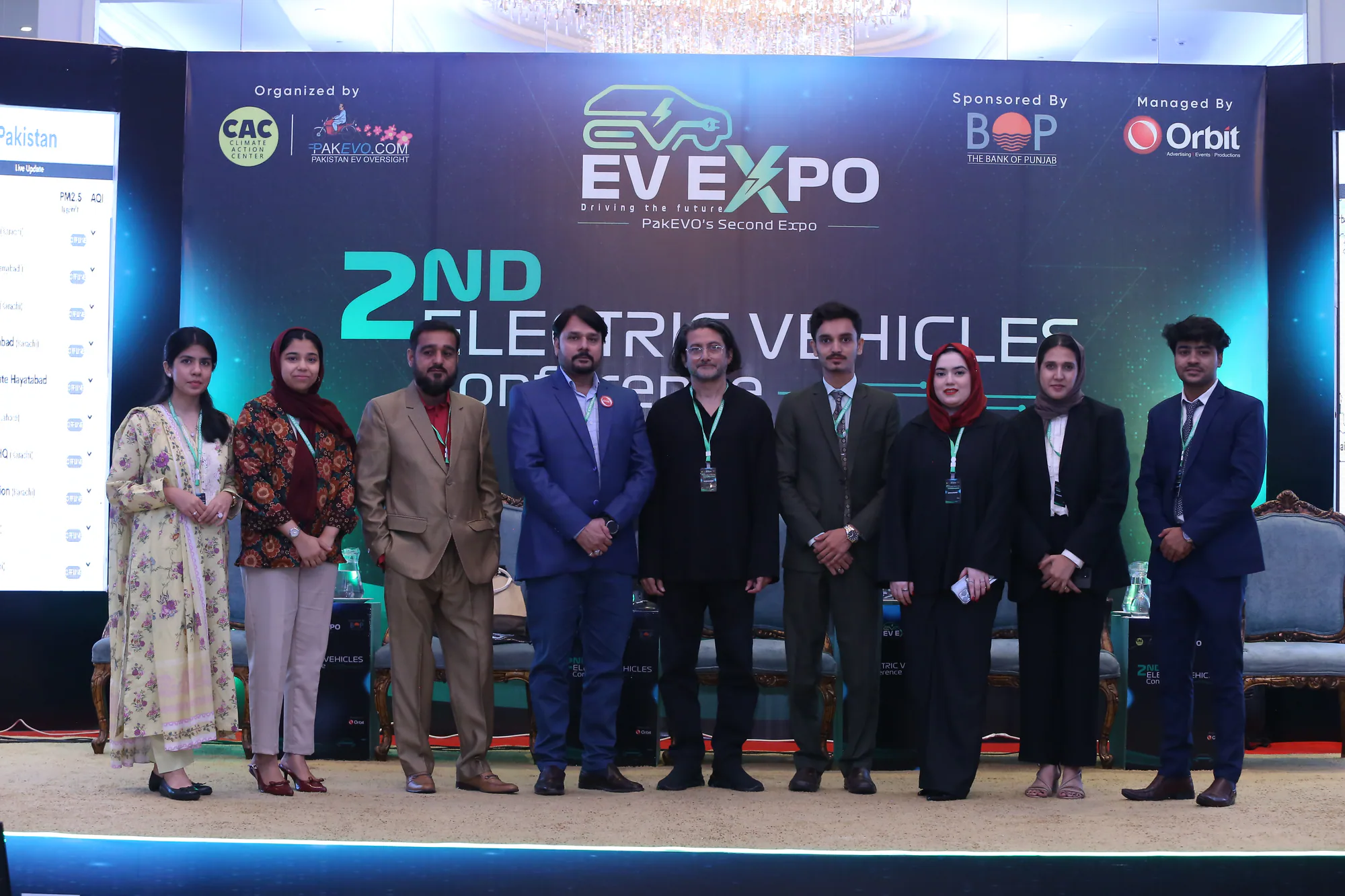
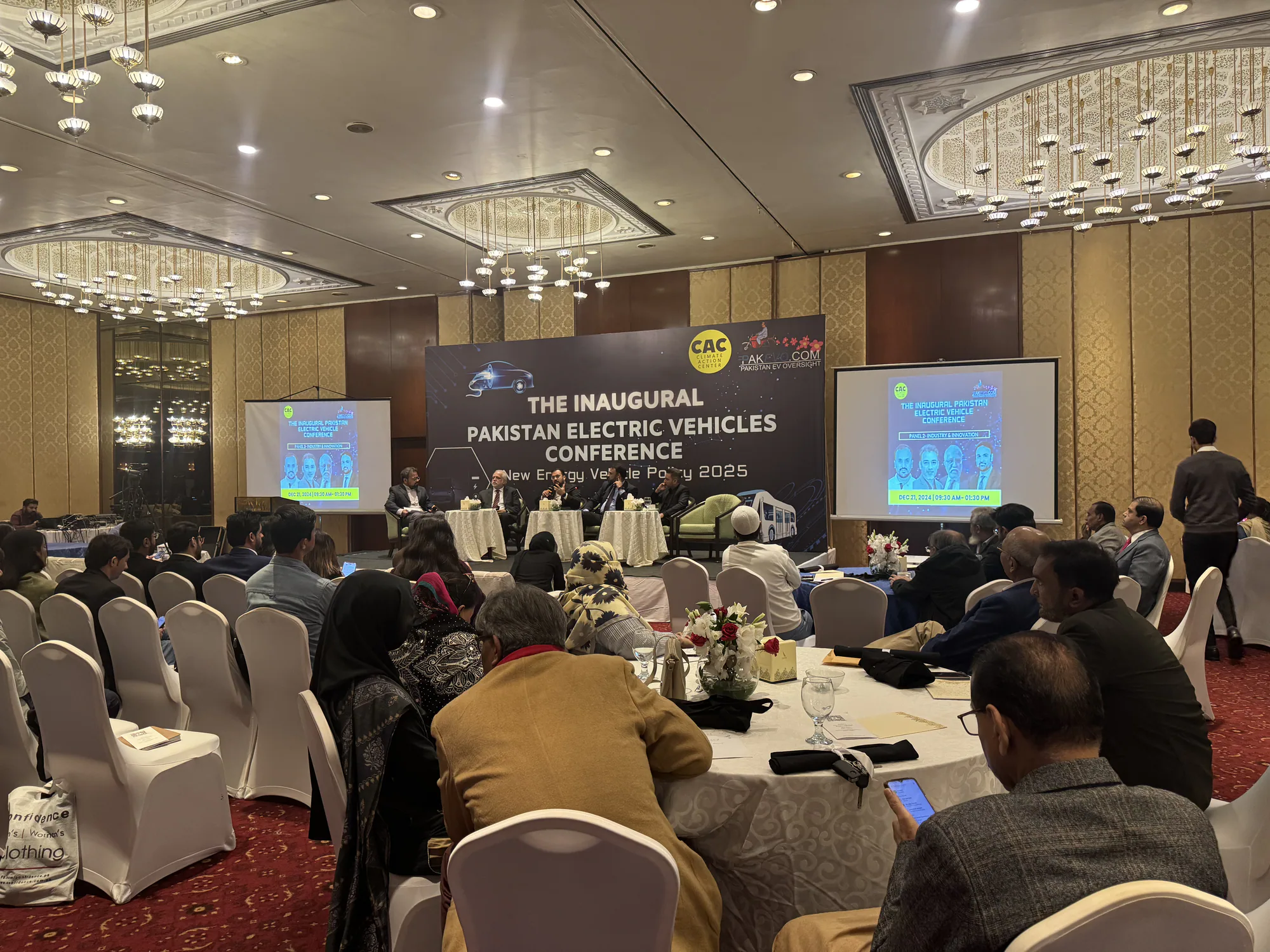
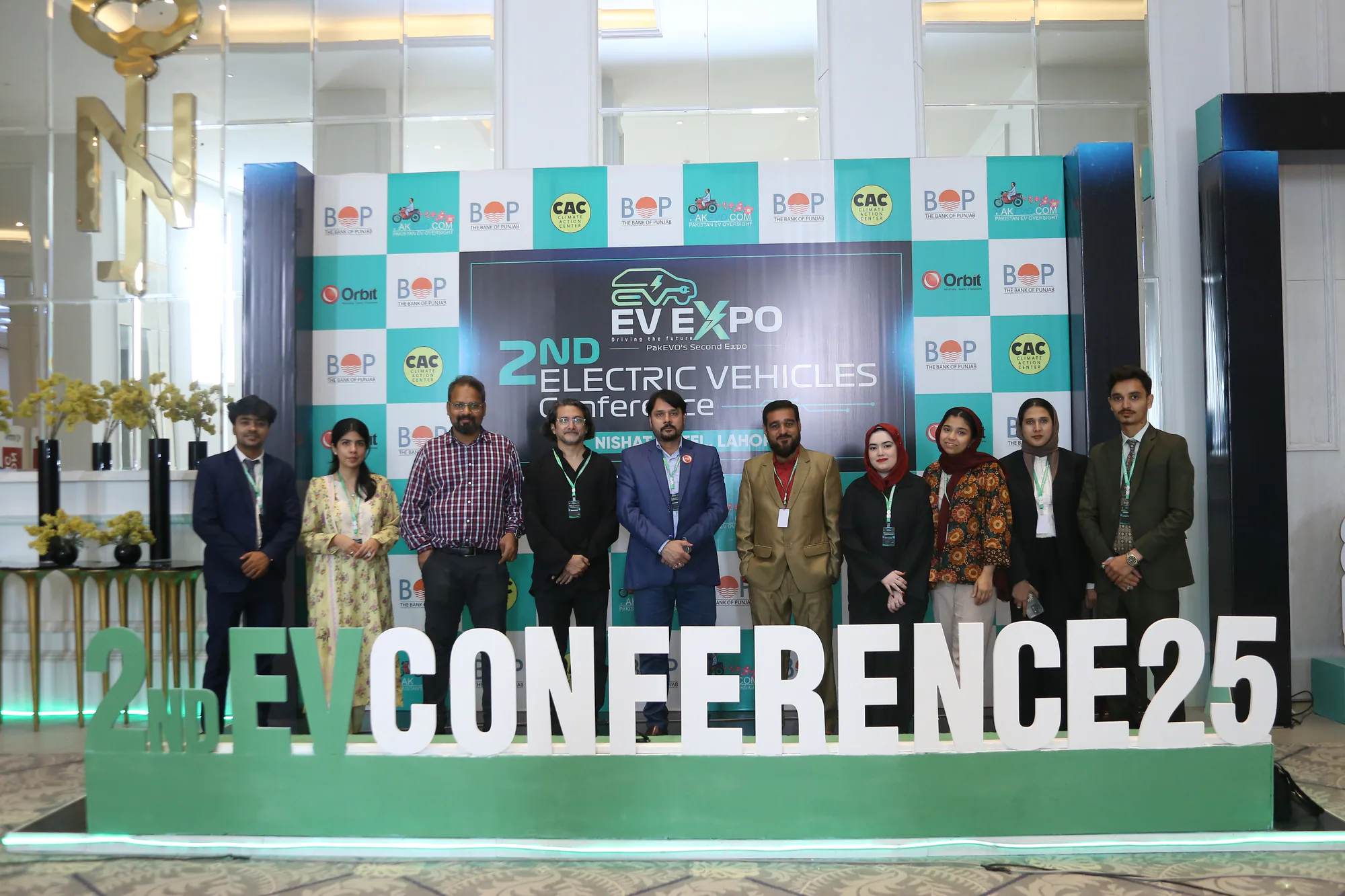
CAC has helped develop Pakistan’s EV conversation through national-level conferences and public engagement. The first Pakistan Electric Vehicles Conference in Karachi created an early platform for government, industry, academia and civil society. The second conference in Lahore expanded that ecosystem.
CAC then planned and coordinated the third Pakistan Electric Vehicles Conference in Multan, bringing together more than 200 participants from academia, industry, government and civil society. The gathering demonstrated that interest in electric mobility extends well beyond Karachi and Lahore.
- 200+
- Participants at the Multan conference
 CAC field image · 01
Clean mobility includes cycling, walking and public transport.
CAC connects electric mobility with the health impacts of poor air quality, especially for children, older citizens, outdoor workers and low-income communities exposed to pollution.
The programme also supports active mobility and low-emission planning. A bicycling plan at Karachi University promotes cycling as a cleaner, healthier and more accessible option within campus spaces. CAC’s approach also includes e-bikes, public transport, walking and better urban planning.
 CAC field image · 01
What the programme is working toward.
- 01Advance EV adoption and clean transport through policy coordination, advocacy and strategic partnerships.
- 02Strengthen collaboration through conferences, expos and platforms such as the Pakistan Auto Show.
- 03Support infrastructure research, roadmap development and renewable-energy integration.
- 04Identify financing opportunities for EVs and sustainable public transport under K-CAP and GKRP 2047.