Climate Governance
Strengthening Climate Governance: Two-Day Workshop Trains Public Sector for Climate Action
Published
Karachi — 25 June 2025
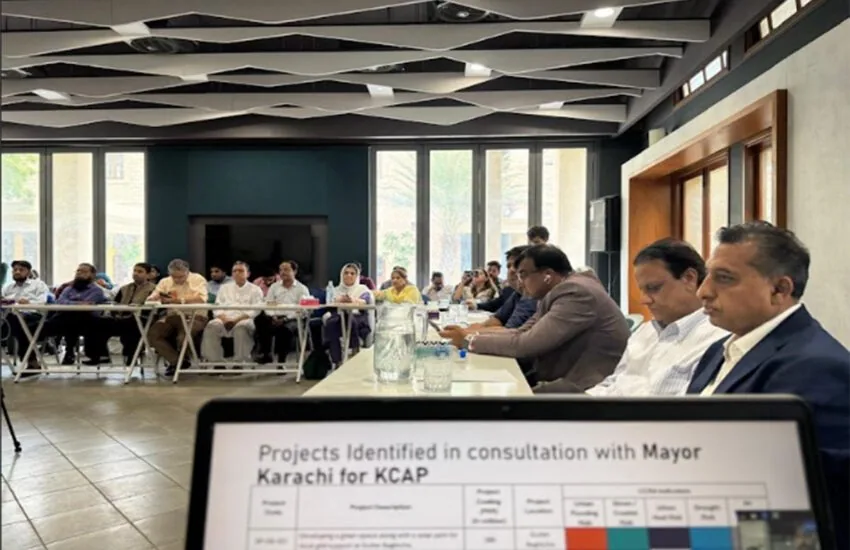
Climate Action Center, in collaboration with the P&D Research and Training Wing, held a two-day workshop on ‘Climate-Responsive Governance: Empowering the Public Sector for Climate Action’ on 24–25 June 2025 at NED University of Engineering and Technology, City Campus, Karachi.
The workshop aimed to build the capacity of government officials to integrate climate priorities into planning and policy in line with the Karachi Climate Action Plan. It gathered participants from government departments, academia, civil society and grassroots organisations around six themes: legal frameworks, digital data infrastructure, energy transition, waste and sanitation, biodiversity and climate finance.
Understanding Karachi’s climate landscape
The first day focused on Karachi’s climate landscape and the alignment of institutional priorities with KCAP goals. Abdul Nabi Memon, Director General from the Research and Training Wing of the Planning and Development Department, Government of Sindh, emphasised that Karachi’s urban complexity and climate vulnerabilities require proactive and informed public-sector leadership.
In the keynote session, CAC Director Yasir Darya introduced the Karachi Climate Action Plan, its vision, key sectors and implementation status. He stressed the need for interdepartmental alignment and the inclusion of local realities in climate strategies.
A thematic session led by legal expert Zubair Abro, Advocate Supreme Court and Green Chamber CAC, examined international climate frameworks, Pakistan’s commitments under the Paris Agreement and Nationally Determined Contributions, and how these instruments can inform provincial legislation and action.
Hafeez Baloch from the Sindh Indigenous Rights Alliance emphasised that climate justice must include indigenous voices and knowledge systems.
Data and cities
During the Data and Cities session, Yasir Darya made the case for real-time, publicly accessible climate-data systems in Karachi and described data as a central priority for effective climate action.
The session introduced tools and databases used to understand and plan cities, including the Air Quality Life Index, LinkedThings, IQAir and AirGradient. CAC proposed an integrated model linking environmental quality, public health and infrastructure data to offer a more complete picture for planners and policymakers.
Dr Ishaque Ansari from the Sindh Bureau of Statistics noted that decades of archived records have been digitised for researchers, while also acknowledging the lack of a formal department for integrated data in Sindh and the continuing difficulty of sharing information across departments.
The session closed with discussion of smart cities, AI-supported early-warning systems and the potential for cloud-based, cross-sectoral databases that could enable climate-responsive governance.
Energy transition in transport and electricity
A panel moderated by Yasir Darya brought together energy expert Abubakar Ismail, Business Recorder Head of Digital Bilal Hussain, NED University Associate Professor Saeed Uddin Ahmed, Sachal Wadho of Bahar Foundation and Ali Raza, Head of Strategy and Growth at E-Turbo.
Panelists examined how technological innovation must be aligned with community inclusion and infrastructure readiness. Discussion covered energy equity, regulation, financing, the distribution of electricity in underserved areas and the relationship between transport planning and land use.
Participants noted Karachi’s dependence on informal transport and the need to incorporate these systems into future planning. Ali Raza also discussed the progress local EV manufacturers have made towards localisation.
Participants had the opportunity to experience test rides of electric vehicles arranged by E-Turbo, connecting the policy discussion with practical mobility options.
Climate finance, sanitation and biodiversity
Day Two opened with a session on climate-finance pathways led by Imtiaz Bhatti, Director General of the Directorate of Urban and Regional Policy and Strategic Planning. The session examined green bonds, carbon credits, climate taxes, fiscal decentralisation and the need for inter-agency climate-financing cells.
Saeed Uddin Ahmed then explored the relationship between waste management, drainage systems and public health, identifying decentralised and climate-resilient sanitation strategies for Karachi.
A screening of the trailer for ‘Rehri Goth: The Unseen Chapters’, prepared by Shifa and Maira Pasha of Karachi University, grounded the discussion in communities that experience the unequal effects of poor waste management.
A biodiversity and ecosystem-resilience panel brought together Oonib Azam, Salman Baloch, Almas, Jawad Khan and Yasir Darya to discuss green infrastructure and community-based conservation.
Later sessions included an overview of KCAP progress by Hasan Ilyas of Urban Unit Punjab and an introduction to green taxonomy by Zarak Khan, Deputy Director at the State Bank of Pakistan. The workshop closed by reaffirming CAC’s commitment to institutional capacity and cross-sector collaboration for a just climate transition.